
Hair Transplant Turkey Istanbul
Getting a hair transplant in Turkey starts with researching clinic reviews, medical team’s credentials and comparing prices, before a consultation to discuss hair loss history, goals and concerns.
Read MoreLess
The Turkey hair transplant process then continues with a medical practitioner preparing a treatment plan, specifying the graft count and advising on the hair transplantation method.
The process also goes beyond surgery to post-treatment support for tracking recovery, identifying side effects early and providing timely care.
Longevita is a multiple award-winning health tourism facilitator, arranging FUE, DHI and Sapphire hair transplants with competitive prices and flexible payment plans. Since 2012, Longevita has supported 40,000+ clients from over 100 countries with over 3,500 5-star reviews. Each client receives personalised support from Longevita’s Case Managers, and dedicated Client Coordinators ensuring an easy and stress-free experience at every touchpoint. Also, we arrange treatments with independent FUE hair restoration specialists, including hair transplant clinicians, with demonstrated clinical expertise, implementing evidence-based techniques. Hair transplantation can benefit men and women with hair loss from androgenetic alopecia, traction alopecia or traumatic injury, if medically suitable. A hair transplant in Turkey allows access to the latest hair transplantation techniques, performed by experienced independent practitioners, providing affordable, high-quality care and natural results.
The benefits of getting a hair transplant in Turkey are listed below.
- Lower treatment cost: Hair transplants in Turkey are more cost-effective due to low cost of living, low clinic overhead and medical wages and a favourable currency exchange rate.
- Expert practitioners: Turkey is home to many highly qualified and experienced hair transplant clinicians. Over a million people travel to Turkey every year for treatments, including hair transplantation, according to the Turkish Healthcare Travel Council, which further helps local practitioners extensive hands-on experience across diverse cases.
- Latest hair transplant methods: In Turkey, clients can get the latest follicular unit extraction (FUE) surgery and its advanced variants Sapphire FUE and direct hair implantation (DHI).
- Natural-looking results: Experienced practitioners utilise the latest hair transplantation techniques to give clients the most natural-looking results.
- State-of-the-art facilities: There are many modern medical facilities with advanced infrastructure and technology in Turkey.
- No wait time: Hair transplants in Turkey are usually available at short notice, provided the client is medically suitable.
- Comprehensive plans: Turkey hair transplant treatment plans are often inclusive of surgery, medication, and recovery support to ensure a smooth experience.
Turkey hair transplant cost varies from £1,100 to £4,400, whereas in the US, US and some Western European countries, the prices can be 50 to 80% higher. Turkey therefore offers a cost-effective and quality alternative to other countries for hair transplants.
 4.8Top Rated Serviceverified by TrustindexTrustindex verifies that the company has a review score above 4.5, based on reviews collected on Google over the past 12 months, qualifying it to receive the Top Rated Certificate.

Our highly experienced case managers will contact you for a Free, no obligation, non-clinical consultation.
Average Cost of Hair Transplants in Turkey
Hair transplants facilitated by Longevita will help you achieve your hair goals and meet your needs.
- Ideal for standard hair restoration with natural results.
- Max Grafts
- PRP in London or Istanbul
- Translator/Interpreter Services
- Medication, Shampoo, Lotion
- 12-Month Post-Surgery Support
- Minimally invasive
- Virtually invisible scarring
- Quick recovery
- High graft survival rate
- Long-lasting results
- Natural-looking outcome
- Male pattern baldness,
- female pattern baldness,
- afro textured hair,
- traction alopecia,
- other stable,
- permanent alopecias when medically suitable,
- facial hair transplant.
- Ideal for denser hairlines and quicker healing.
- Max Grafts
- PRP in London or Istanbul
- Translator/Interpreter Services
- Medication, Shampoo, Lotion
- 12-Month Post-Surgery Support
- Smaller incisions
- Greater precision and accuracy
- Quicker recovery than classic FUE
- High graft survival rate
- Male pattern baldness,
- female pattern baldness,
- afro textured hair,
- traction alopecia,
- other stable,
- permanent alopecias when medically suitable,
- facial hair transplant.
- Ideal for maximum density and natural angles.
- Max Grafts
- PRP in London or Istanbul
- Translator/Interpreter Services
- Medication, Shampoo, Lotion
- 12-Month Post-Surgery Support
- Unshaven (partially) hair transplant
- High-density, natural results
- Greater precision
- Faster recovery than classic FUE
- Better graft survival
- Male pattern baldness,
- female pattern baldness,
- traction alopecia,
- other stable,
- permanent alopecias when medically suitable,
- facial hair transplant.
Understanding the cost of a hair transplant in Turkey can be confusing, especially with so many clinics advertising different prices and “all-inclusive” offers. The reality is that your final cost depends on several important factors, including the number of grafts required, the technique used, the experience of the surgical team, and what is genuinely included in your treatment plan. Our guide breaks down real pricing, explains cost per graft versus package pricing, and shows you exactly what to look for when comparing clinics, so you can make an informed and confident decision.
Hair Transplant Turkey Before and After Results
Thousands have trusted Longevita to facilitate their hair restoration. Explore our before-and-after gallery to see the transformative power of hair transplantation surgery and the natural results patients have achieved.
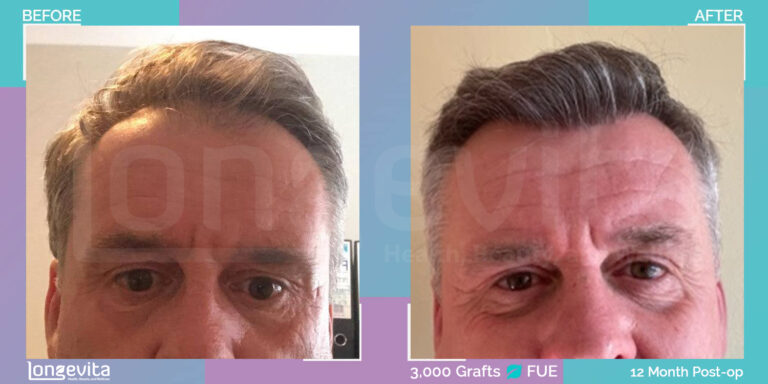
- Age: 54
- FUE
- 3,000 grafts
- 12 Months
“Restored density with a mature, natural look that enhances facial character.”
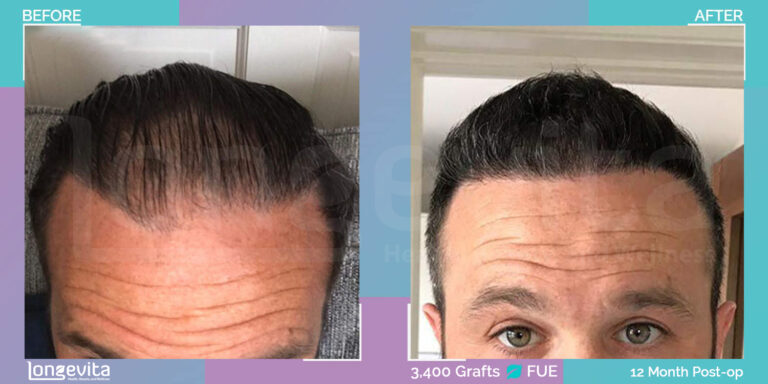
- Age: N/A
- FUE
- 3,400 grafts
- 12 Months
“Front line rebuilt with thick, even growth for a rejuvenated and youthful look.”
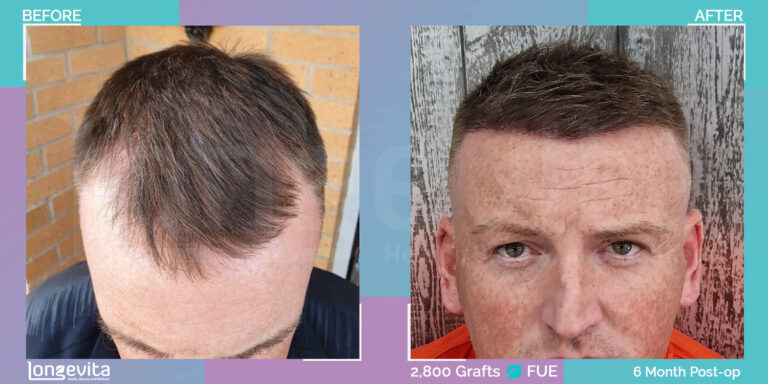
- Age: 38
- FUE
- 2,800 grafts
- 6 Months
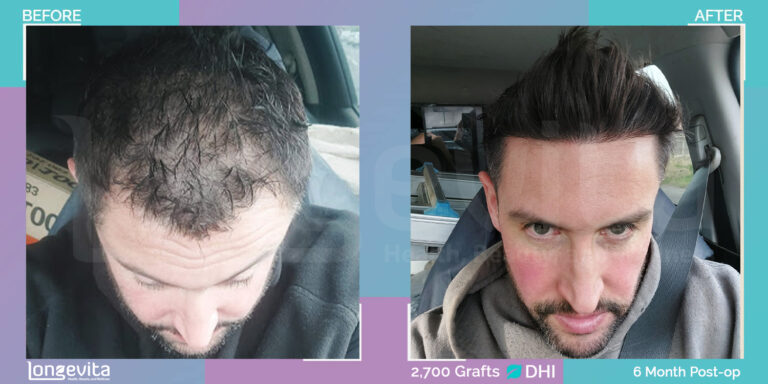
- Age: 41
- DHI
- 2,700 grafts
- 6 Months
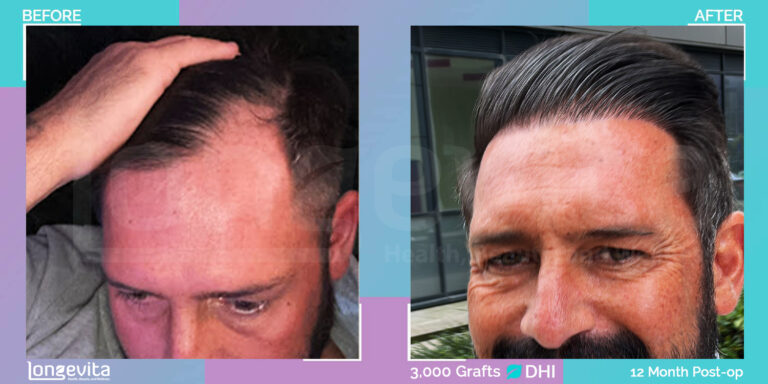
- Age: 38
- DHI
- 3,000 grafts
- 12 Months
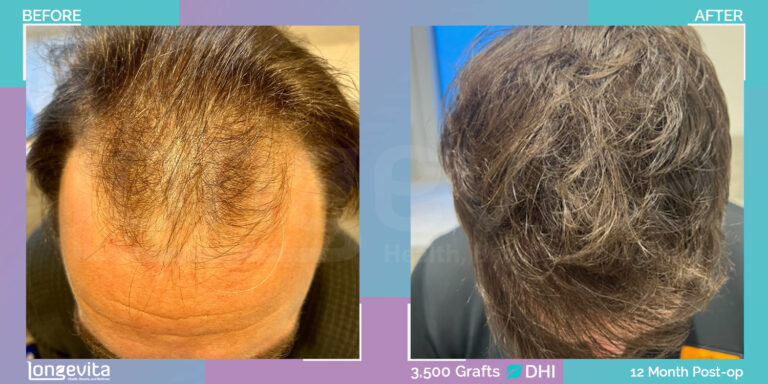
- Age: 37
- DHI
- 3,500 grafts
- 12 Months
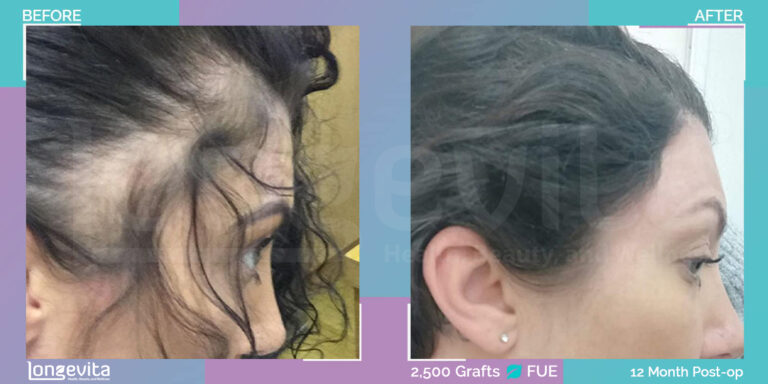
- Age: 34
- FUE
- 2,500 grafts
- 12 Months
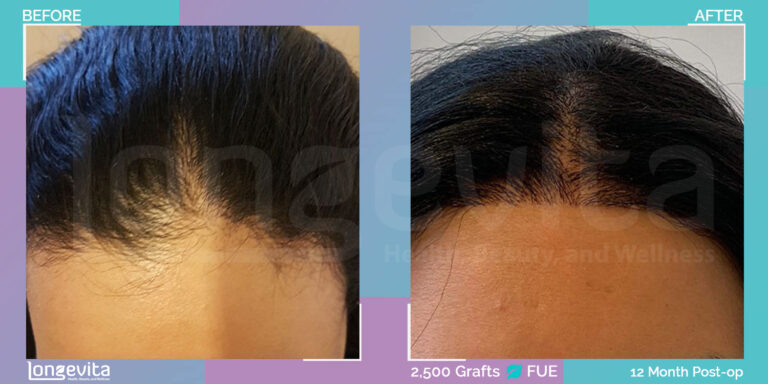
- Age: 22
- FUE
- 2,500 grafts
- 12 Months
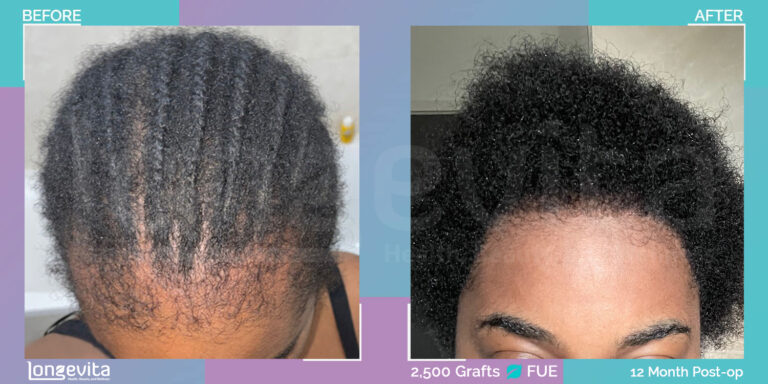
- Age: 31
- FUE
- 2,500 grafts
- 13 Months
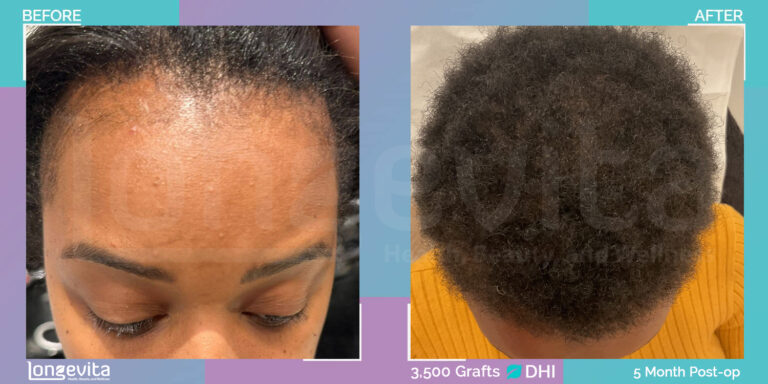
- Age: 31
- DHI
- 3,500 grafts
- 5 Months
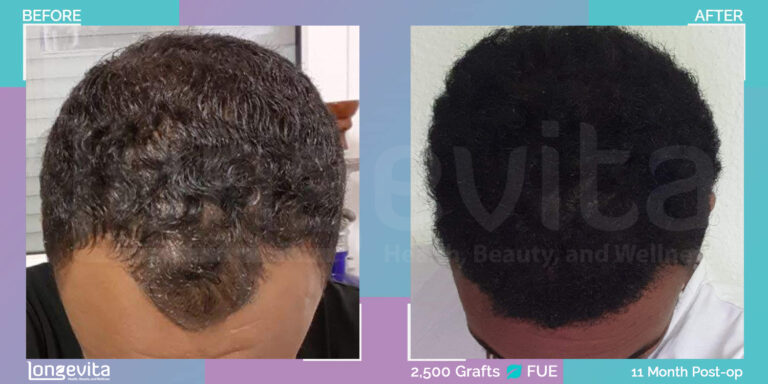
- Age: N/A
- FUE
- 2,500 grafts
- 11 Months
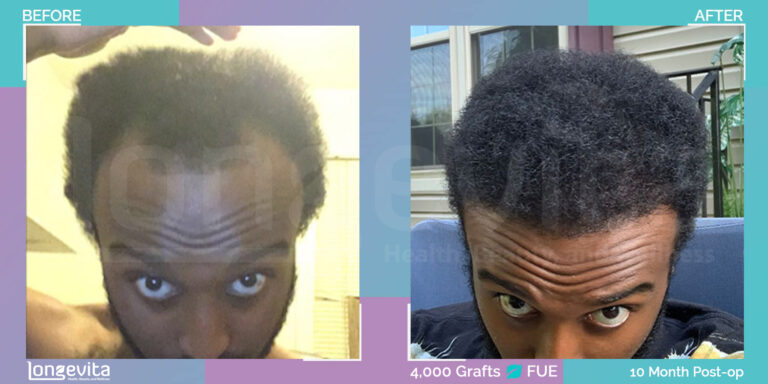
- Age: 25
- FUE
- 4,000 grafts
- 10 Months
“Receding hairline transformed into a full frame, rebuilding both density and shape for a strong, confident look with lasting results.”
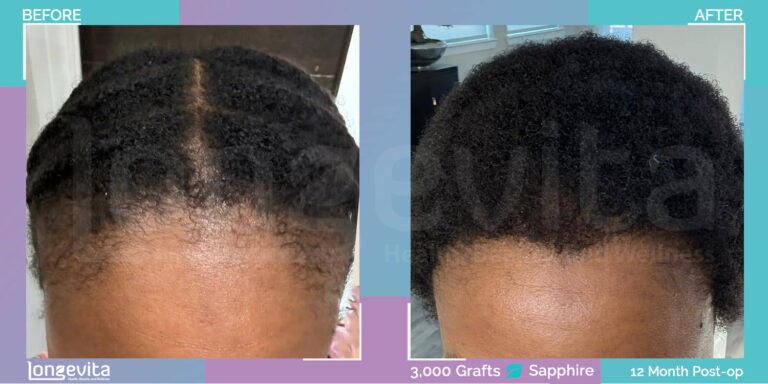
- Age: 39
- Sapphire FUE
- 3,000 grafts
- 12 Months
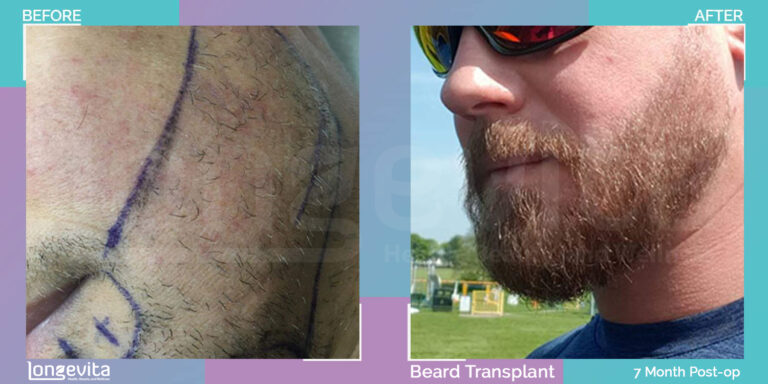
- Age: N/A
- FUE Beard
- 2,600 grafts
- 7 Months
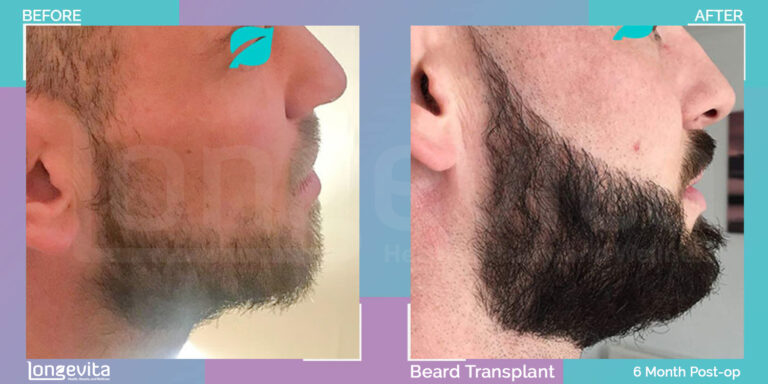
- Age: N/A
- FUE Beard
- 3,500 grafts
- 6 Months
“Sparse growth replaced with strong, even density for a defined, masculine look.“
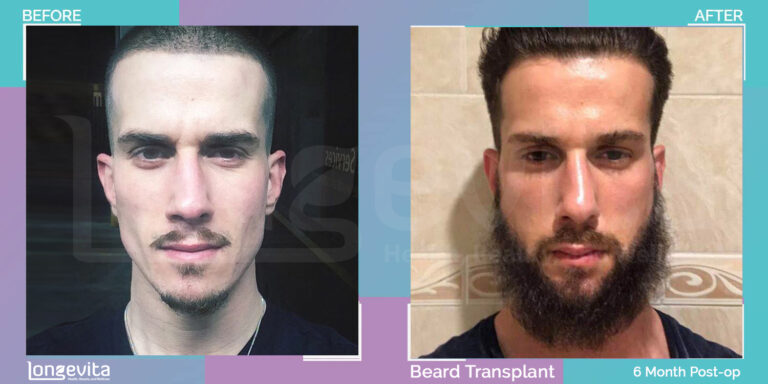
- Age: 27
- FUE Beard
- 3,000 grafts
- 6 Months
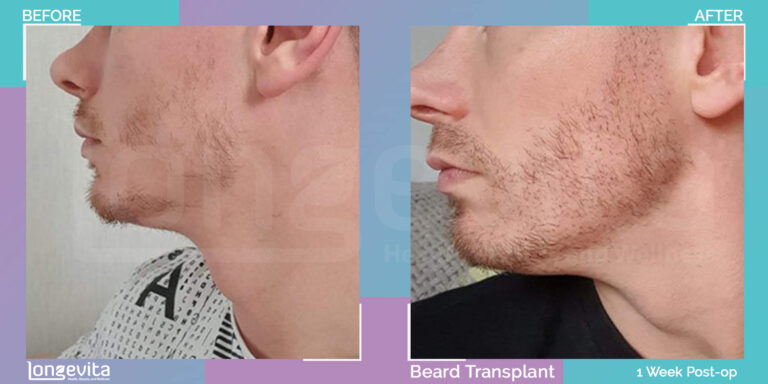
- Age: 30
- FUE Beard
- 2,500 grafts
- 1 Week
Join thousands of satisfied clients who have regained their confidence with hair transplant procedures in Turkey.
Why Turkey Became a Global Hub for Hair Transplants
Turkey has become a global hub for hair transplants by offering affordable treatment costs, world-class medical facilities, highly skilled hair transplant surgeons and advanced hair transplantation methods, such as FUE, Sapphire FUE and DHI, using the latest medical technology. Additionally, Turkey is also an attractive tourist destination, due to its rich cultural and historical heritage and iconic landmarks.
Turkey has become a popular destination for medical tourists seeking hair transplants for the reasons listed below.
- Affordability: Turkey’s low cost of living reduces expenses for real estate, wages, insurance, and legal services, lowering procedure prices. The devaluation of the Turkish lira against the USD and GBP further increases affordability for international patients.
- State-of-the-art facilities: Turkish medical facilities feature cutting-edge technology and modern infrastructure while adhering to stringent healthcare regulations and safety protocols.
- Highly experienced professionals: Turkey has a large pool of highly qualified and skilled hair transplant practitioners with a large and diverse patient portfolio.
- Advanced techniques: The latest hair transplant technique of FUE and its variants Sapphire FUE (using a sapphire-tipped blade) and DHI (using a Choi implanter pen) are widely available across Turkish hair transplant clinics.
- Tourism draw: Turkey’s a popular tourist destination and Turkish hospitality is world renowned. Over 50 million foreign tourists came to Turkey in 2024.
Different Types of Hair Transplants Performed in Turkey
Explore the different hair transplantation types, from the classic FUE to Sapphire FUE and DHI. Find out which transplantation method meets your needs most effectively.
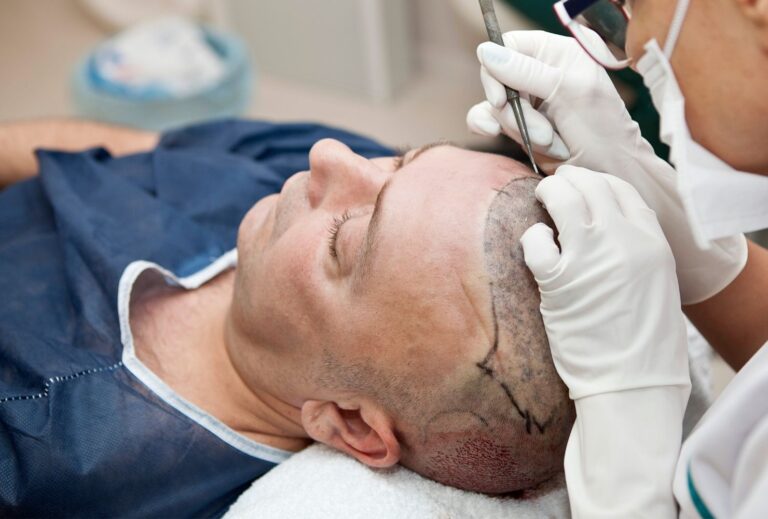
Natural-Looking Results with FUE
Follicular unit extraction, or FUE, is a minimally invasive hair transplant technique using a motorised punch tool for the extraction of individual hair grafts, leaving no visible linear scarring. FUE has an over 90% hair follicle survival rate, leaves virtually invisible scars and gives long-lasting, natural-looking results. It is most commonly used in the treatment of androgenetic alopecia in men and women.
- Minimally invasive extraction with no stitches involved
- Quick recovery and less discomfort compared to the older FUT technique
- High hair graft survival rate
- Transplanted hair blends perfectly with natural hair
Technical Details
Technique:
Individual grafts are extracted with a motorised punch tool, incisions are made with a metal blade, and grafts are implanted with forceps
Duration:
6-8 hours
Recovery:
5-7 days
Results:
Initial growth visible after 3 to 4 months, full results seen after 12 to 18 months
Suitability:
All hair loss stages (Norwood 2 to 7 in males and Ludwig 1 to 3 in females)
Anaesthesia:
Local anaesthesia
Scars:
Circular, dot-like scars typically less than 1mm in diameter
Key Advantages
- Less visible scarring: FUE hair transplants avoid long linear incisions, leaving only tiny, dot-like scars that are not visible, even with short hair.
- Minimally invasive: Unlike FUT, where a scalp strip is excised to obtain grafts, FUE uses a punch tool to collect grafts, requiring no stitches or staples.
- Less painful recovery: Pain after FUE hair transplant is relatively less than that of FUT hair transplant, and the pain usually resolves sooner, according to research.
- Natural-looking results: As opposed to outdated hair transplantation methods involving hair plugs, FUE involves individual hair grafts that do not leave a doll's head appearance. Its results are seamless and perfectly natural-looking.
- High graft survival: A high hair graft survival rate ensures dense and full results with FUE hair transplantation.
Treatment Process
The steps involved in FUE hair transplantation are listed below.
- Consultation: An independent hair transplant surgeon will perform a hair analysis, assess the level of baldness and determine the number of grafts necessary before surgery.
- Hairline design: A new hairline is drawn, and the donor area is marked before the hair is shaved off completely.
- Anaesthesia: The scalp is anaesthetised for a painless surgery.
- Graft extraction: Individual hair grafts are extracted from the back and sides of the scalp (donor area) with a punch tool.
- Incision-making: Using a metal blade, incisions are made in the balding (recipient) area, varying in size from 0.6 to 1.2mm.
- Graft implantation: Grafts are placed into the incisions using forceps.
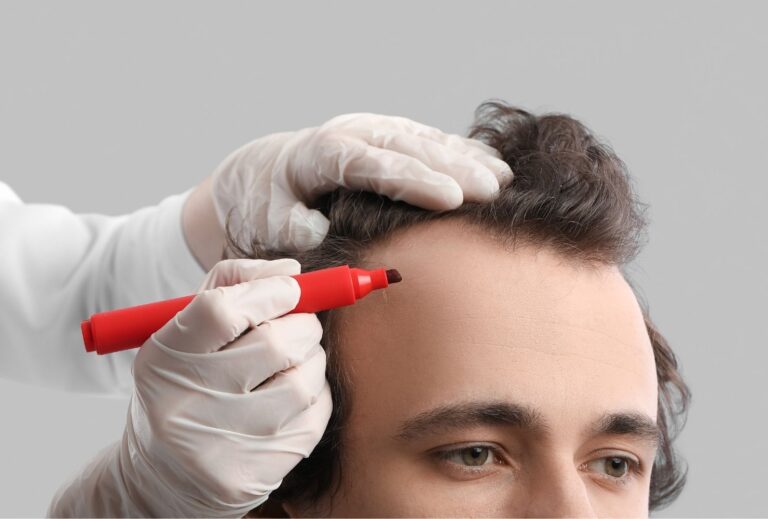
High-Density Results with Direct Hair Implantation
Direct hair implantation, or DHI, is an advanced type of FUE hair transplant that uses Choi implanter pens to make incisions and place grafts simultaneously without the need for pre-made incisions. Faster recovery, reduced scalp trauma, improved precision in graft placement, and higher densities and graft survival rates are some of the benefits.
- Partial shaving for more discretion
- Reduced scalp trauma and quicker recovery than classic FUE
- Smaller scars
- Higher hair graft survival rate due to minimal handling and reduced time outside the body
- Precise control over angling, depth, and direction of grafts
Technical Details
Technique:
Using Choi implanter pens, the sites are created and grafts are placed simultaneously after the grafts are extracted with a punch tool
Duration:
6-8 hours
Recovery:
5-7 days
Results:
New hair starts to grow in 3-4 months, full results are visible after 12-18 months
Suitability:
Suitable for hairline restoration and increasing hair density in small areas (requiring less than 3,000 grafts)
Anaesthesia:
Local anaesthesia
Scars:
Tiny, circular dot-scars (no linear scar)
Key Advantages
- High graft survival: By minimising handling and reducing the amount of time that grafts spend outside the body, the likelihood of their surviving is increased.
- Partial shaving: With DHI, only the donor area needs to be shaved, while the recipient area can remain unshaved.
- Faster recovery: Choi implanter pens make smaller incisions and apply less force to the scalp, reducing trauma and shortening recovery time.
- Greater precision and natural results: Choi implanter pen allows the surgeon to precisely control the angle, depth, and direction of the grafts, resulting in even more natural-looking results.
- High-density results: High graft survival, reduced trauma and precision placement can positively impact the final density.
Treatment Process
The steps involved in DHI hair transplantation are listed below.
- Consultation: An independent hair transplant surgeon will perform a hair analysis, assess the extent of baldness and determine the number of grafts required.
- Hairline design: A new hairline design is drawn, and the donor area is shaved afterwards.
- Donor area preparation: The donor area is administered local anaesthesia to avoid pain during surgery.
- Graft extraction: A motorised punch tool is used to extract individual hair grafts from the donor area.
- Site creation and graft implantation: Grafts are inserted in Choi implanter pens, which are used to create slits in the recipient area and insert grafts into them simultaneously.
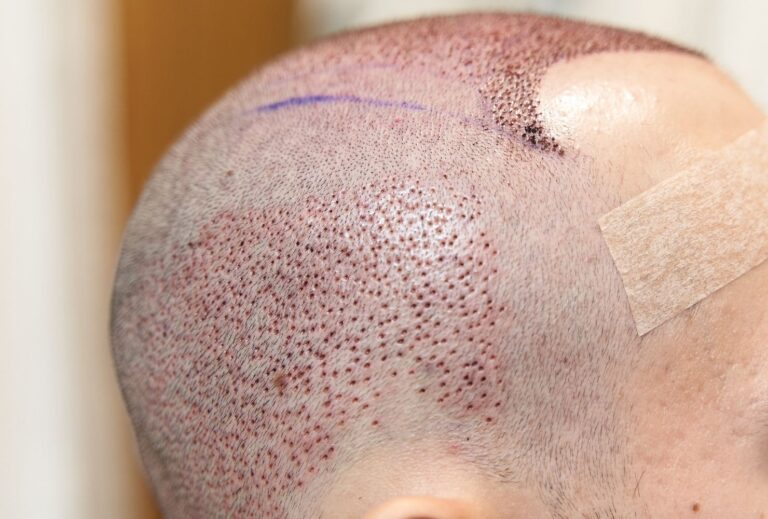
Dense, Natural Results with Sapphire FUE
Sapphire hair transplant is a type of FUE that uses V-tipped sapphire blades instead of standard steel blades to create small, precise and clean incisions in the recipient area. Sapphire FUE delivers more natural-looking results, minimises tissue damage and scalp trauma, in turn, supporting faster recovery. Sapphire FUE also has higher graft survival, resulting in a fuller appearance. Between DHI and Sapphire FUE, the latter is ideal for sessions with more than 3,000 grafts.
- Smaller, precise incisions
- Reduced scalp trauma
- Quicker recovery
- High graft survival rate
Technical Details
Technique:
Graft extraction with a motorised punch tool is followed by site creation with v-tipped Sapphire blades; grafts are placed in the incisions with forceps
Duration:
6-8 hours
Recovery:
5-7 days
Results:
Initial growth visible after 3-4 months, full results are seen in 12-18 months
Suitability:
Ideal for those requiring 3,000+ grafts
Anaesthesia:
Local anaesthesia
Scars:
Small, circular, dot-like scars less than 1mm in diameter
Key Advantages
- Improved precision: V-tipped sapphire blades create more precise incisions, giving even more natural-looking results.
- Larger sessions: Unlike DHI, a session of Sapphire FUE is not limited to 3,000 grafts.
- Faster recovery: Smaller incisions make post-operative recovery quicker in Sapphire FUE.
- Higher graft survival rate: Sapphire blades ensure an improved rate of graft survival, giving better results.
Treatment Process
The steps involved in Sapphire FUE hair transplantation are listed below.
- Consultation: An independent Hair transplant surgeon analyses the hair and extent of baldness and determines the number of grafts required.
- Hairline design: A new hairline is drawn for the patient to see. The donor and recipient areas are also marked before the head is completely shaved.
- Donor area preparation: The back and sides of the scalp are anaesthetised to avoid pain during surgery.
- Graft extraction: A motorised punch tool is used to extract grafts from the donor area.
- Site creation: Small slits (0.6-1.2mm) are made in the recipient area for graft insertion.
- Graft implantation: Grafts are placed into the incisions with the help of forceps.
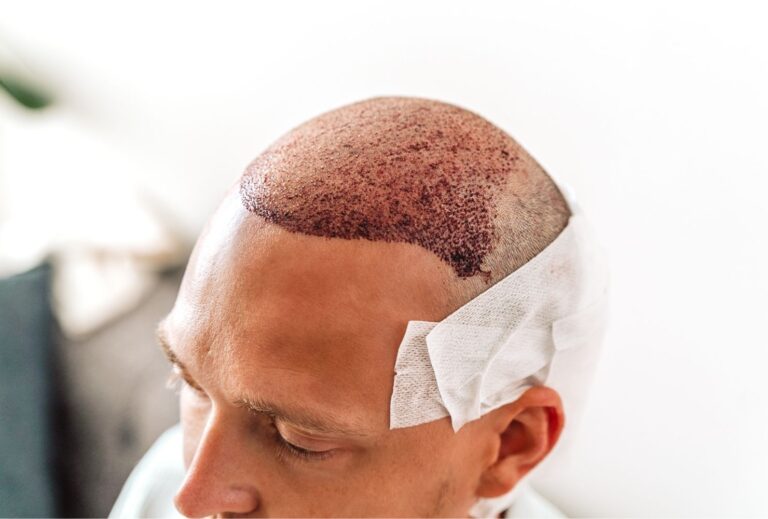
Treat Pattern Baldness with Men’s Hair Transplant
Hair transplants for men are popular among males suffering from androgenetic alopecia or pattern baldness. In male hair transplantation surgery, hair is redistributed from the donor area to the recipient area of the scalp, either using the FUT (follicular unit transplantation) or FUE (follicular unit extraction) technique. The results of the hair transplant are long-lasting and natural-looking.
- Long-lasting results
- Natural-looking outcome
- More cost-saving in the long run
- Improved confidence
- Beard and moustache transplant possible
Technical Details
Technique:
FUT, FUE, DHI, or Sapphire FUE methods
Duration:
6-8 hours
Recovery:
5-10 days
Results:
Initial growth seen after 3-4 months, full results visible after 12-18 months
Suitability:
Men usually over the age of 25, and women with stable, permanent hair loss
Anaesthesia:
Local anaesthesia
Scars:
Small, circular scars in FUE, long, linear scar in FUT
Key Advantages
- Long-lasting results: Transplanted grafts are resistant to dihydrotestosterone (DHT), the hormone that shrinks hair follicles, therefore, the results are long-lasting.
- Natural results: The person’s own natural hair is redistributed on the scalp, therefore, the transplanted hair blends seamlessly with non-transplanted hair, giving natural results.
- Long-term cost-saving: Hair transplant is a long-term investment, giving long-lasting results and does not require the same maintenance cost as a hair system would.
- Improved self-esteem and confidence: Hair transplant surgery has been reported to make a person feel more satisfied with their appearance and improve their self-esteem.
Treatment Process
- Consultation: An independent Hair transplant surgeon analyses the scalp and the hair and determines the number of grafts you need.
- Hairline design: The design of the new hairline is drawn, and the head is shaved.
- Donor area preparation: Local anaesthesia is administered to avoid pain during surgery.
- Graft extraction: Hair grafts are harvested from a strip of skin excised from the scalp, as happens in FUT, or extracted directly from the scalp using a punch tool and forceps.
- Site creation: Small slits, varying in size from 0.6 to 1.2mm, are created in the balding areas for graft insertion.
- Graft implantation: Grafts are placed into the slits with the help of forceps or implanter pens.
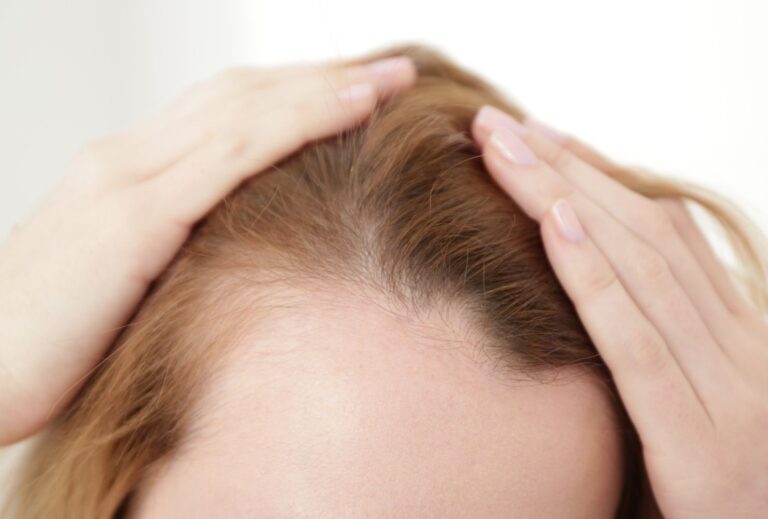
Long-lasting Restoration with Hair Transplant for Women
Hair transplants for women provide a surgical solution for long-lasting hair loss, whether caused by female pattern baldness, traction alopecia, trauma or other conditions. Female hair transplants can be performed with follicular unit transplantation (FUT) or the latest follicular unit extraction (FUE) technique. In both methods, DHT-resistant follicles from the donor area are removed to the balding area for long-lasting growth. The surgery takes place under local anaesthesia and gives natural-looking results.
- Long-lasting hair growth
- Natural-looking results
- Long-term cost savings
- Improved confidence and self-esteem
- Hairline lowering possible
Technical Details
Technique:
FUT, FUE, DHI, or Sapphire FUE methods
Duration:
6-8 hours
Recovery:
5-10 days
Results:
Initial growth seen after 3-4 months, full results visible after 12-18 months
Suitability:
Women with female pattern baldness, traction alopecia, traumatic alopecia, or other types of stable, permanent hair loss and high foreheads
Anaesthesia:
Local anaesthesia
Scars:
Small, circular scars (less than 1mm diameter) in FUE, and long, linear scar (15 to 30 cm in length) in FUT
Key Advantages
- Long-lasting results: Hair grafts are taken from a safe donor zone at the back and sides of the scalp, where follicles are resistant to the hormone that causes hair loss. Therefore, the results of hair transplantation are long-lasting.
- Natural results: Hair transplants for women involve redistributing the patient's own real hair, so the results are completely natural.
- Cost-effective: In contrast to hair systems, hair transplants do not involve any extra maintenance costs. You spend what you would on your natural hair.
- Improved confidence: In addition to restoring confidence in their appearance, hair transplantation can boost self-esteem as well.
Treatment Process
- Consultation: An independent hair transplant surgeon will perform a hair analysis, assess the areas of baldness and determine the number of grafts required.
Hairline design: The surgeon will draw the new hairline, which is followed by head shaving (if needed). - Donor area preparation: The donor area is injected with local anaesthesia before graft extraction.
- Graft extraction: In FUE, a motorised punch tool scores the skin around individual grafts, which are then extracted with tweezers, and in FUT, a strip of skin is excised from the scalp for extracting grafts.
- Site creation: Small incisions are created in the recipient area for graft insertion.
- Implantation: Using implanter pens or forceps, grafts are inserted into the slits to later take root.
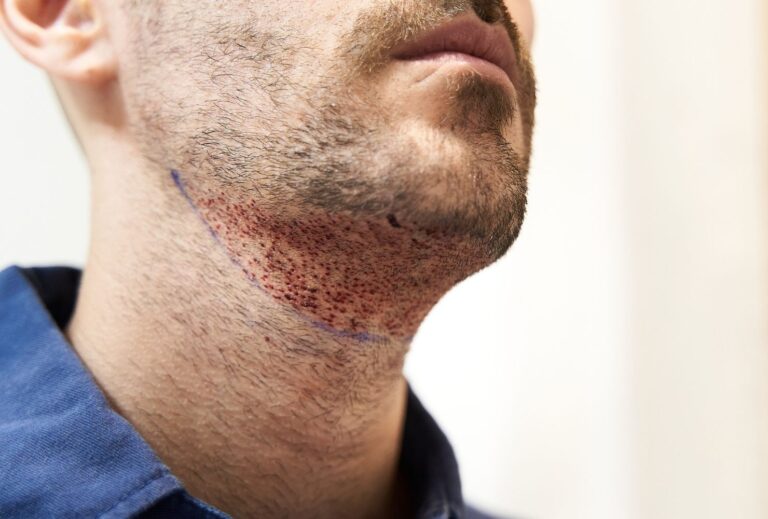
Full, Dense Beard with Beard Hair Transplant
A beard hair transplant involves transplanting hair into the beard area, usually taken from the scalp. With the scalp as the donor area, beard transplants can be done using follicular unit extraction (FUE) and follicular unit transplantation (FUT) techniques. Hair grafts extracted from the scalp are inserted into the beard area via small incisions which follow the angle of existing hair. Local anesthesia is required for the procedure, and it results in a thick and full beard that lasts longer.
- Dense beard hair
- Long-lasting growth
- Natural results
- Hairline lowering possible
Technical Details
Technique:
FUT, FUE, DHI, or Sapphire FUE methods
Duration:
6-8 hours
Recovery:
5-10 days
Results:
Initial growth seen after 3-4 months, full results visible after 12-18 months
Anaesthesia:
Local anaesthesia
Scars:
Small, circular scars (less than 1mm diameter) in FUE, and long, linear scar (15 to 30 cm in length) in FUT
Key Advantages
- Long-lasting results: The results of a beard hair transplant are long-lasting, so the patient will maintain a thick, full and dense beard.
- Natural results: The patient's own hair is used for beard hair transplants, and the grafts are implanted to mimic the natural angles of facial hair, so the results are natural-looking.
- Improved confidence: Beard hair transplantation can improve an individual’s self-esteem and make them feel more confident about their appearance.
Treatment Process
- Donor area planning: An independent hair transplant surgeon assesses the quality and density of the donor area, usually the back and sides of the scalp, determines the required graft count and draws the new beard design.
- Graft extraction: Either grafts are extracted directly from the scalp using FUE or, in FUT, a strip of skin is removed from the scalp for harvesting the grafts.
- Site creation: Small incisions (0.5 to 0.9 mm in size) are created in the beard area for graft implantation.
- Graft implantation: Individual hair grafts are inserted into the pre-made incisions via implanter pens or forceps.
Meet the Expert Hair Transplant Clinicians
We at Longevita aim to deliver the highest-quality service to our clients. This is why we only facilitate hair transplants with the most experienced and internationally renowned independent surgeons. Through them, we’re able to arrange comprehensive hair loss treatments to a wide variety of people.
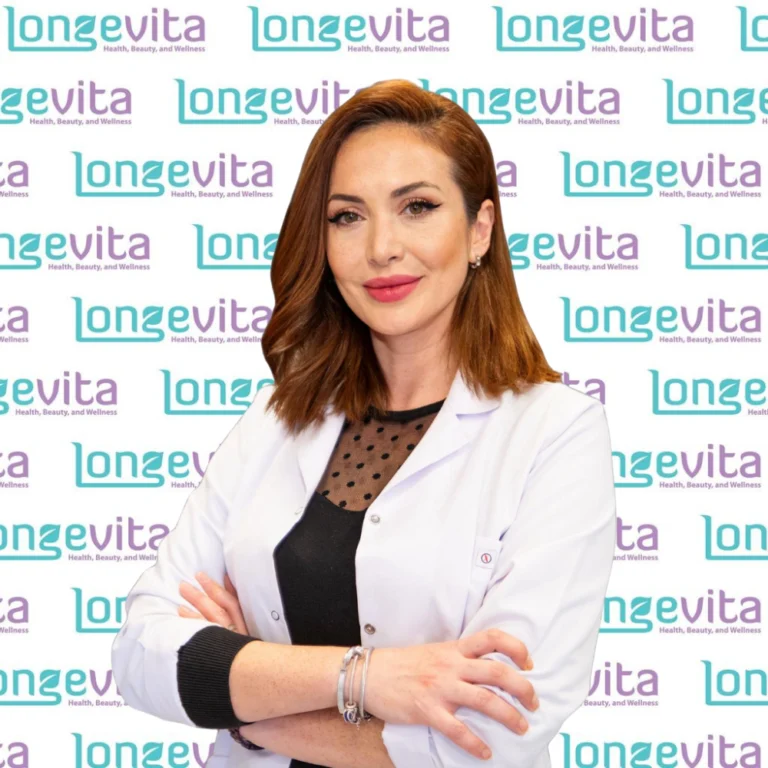
Dr. Cagla
Dr. Hassan
Dr. Gizem
Hair Transplant in Turkey vs Other Countries: Cost, Quality & Reliability Comparison
Take a look at an in-depth comparison of Turkish hair transplants with leading global destinations, in terms of cost, quality and reliability.
Is a hair transplant in Turkey better than in the USA?
Cost Comparison
| Country | Average Cost GBP | Average Cost USD | Average Cost EUR | Savings |
|---|---|---|---|---|
| 🇹🇷 Turkey | £1,100 - £4,400 | $1,500 - $6,000 | €1,300 - €5,100 | Save 40-88% |
| 🇺🇸 USA | £7,400 - £8,900 | $10,000 - $12,000 | €8,500 - €10,200 | Higher Cost |
Quality
🇹🇷 Turkey
World-class facilities, 500+ procedures per surgeon annually
🇺🇸 USA
Top-tier medical care, but less specialised volume
Reliability
🇹🇷 Turkey
95%+ success rates, JCI-accredited clinics
🇺🇸 USA
Excellent regulation, but 3-5x higher cost
Turkey's Advantages
- Cost savings of $10,000-$15,000 on average
- Higher surgeon specialisation and procedure volume
- All-inclusive packages (hotel, transfers, aftercare)
- Same advanced techniques (FUE, DHI) at fraction of cost
- No waiting lists - immediate scheduling
Considerations
- Travel logistics and time off work
- Follow-up care requires local arrangements
- Language barriers (though most clinics offer translation)
Bottom Line
Turkey consistently offers the best value proposition for hair transplants globally, combining world-class quality with significantly lower costs. With over 1 million procedures performed annually and surgeons handling 500+ cases per year, Turkey has built unmatched expertise in hair restoration.
Is Turkey a better choice for hair transplants than Dubai (UAE)?
Cost Comparison
| Country | Average Cost GBP | Average Cost USD | Average Cost EUR | Savings |
|---|---|---|---|---|
| 🇹🇷 Turkey | £1,100 - £4,400 | $1,500 - $6,000 | €1,300 - €5,100 | Save 44-78% |
| 🇦🇪 Dubai (UAE) | £2,000 - £5,000 | $2,700 - $6,800 | €2,300 - €5,800 | Higher Cost |
Quality
🇹🇷 Turkey
2nd globally in hair transplant research
🇦🇪 Dubai (UAE)
Ultra-luxury facilities, but lower procedure volume
Reliability
🇹🇷 Turkey
Established hub with proven track record
🇦🇪 Dubai (UAE)
High safety standards, but newer to the market
Turkey's Advantages
- Significantly lower costs for same quality
- More experienced surgeons with higher case volumes
- Turkey ranks 2nd globally in hair transplant advancements
- Better climate for post-operative recovery
- More comprehensive all-inclusive packages
Considerations
- Dubai offers ultra-luxury amenities
- Dubai may be more convenient for Middle Eastern patients
- English more widely spoken in Dubai
Bottom Line
Turkey consistently offers the best value proposition for hair transplants globally, combining world-class quality with significantly lower costs. With over 1 million procedures performed annually and surgeons handling 500+ cases per year, Turkey has built unmatched expertise in hair restoration.
Is Turkey more reliable for hair transplants than Canada?
Cost Comparison
| Country | Average Cost GBP | Average Cost USD | Average Cost EUR | Savings |
|---|---|---|---|---|
| 🇹🇷 Turkey | £1,100 - £4,400 | $1,500 - $6,000 | €1,300 - €5,100 | Save 29-89% |
| 🇨🇦 Canada | £6,300 - £10,400 | $8,500 - $14,000 | €7,200 - €11,900 | Higher Cost |
Quality
🇹🇷 Turkey
Dedicated hair transplant specialists
🇨🇦 Canada
Excellent healthcare system, limited cosmetic focus
Reliability
🇹🇷 Turkey
1M+ procedures annually, proven expertise
🇨🇦 Canada
High medical standards, but limited availability
Turkey's Advantages
- Massive cost savings - Canada has world's highest prices
- No waiting lists (Canada has long waiting times)
- Higher surgeon specialisation in hair restoration
- More advanced techniques and equipment
- Better medical tourism infrastructure
Considerations
- Canada's healthcare regulation is excellent
- No travel required for Canadian residents
- Easier follow-up care in home country
Bottom Line
Turkey consistently offers the best value proposition for hair transplants globally, combining world-class quality with significantly lower costs. With over 1 million procedures performed annually and surgeons handling 500+ cases per year, Turkey has built unmatched expertise in hair restoration.
Is Turkey cheaper for hair transplants than the UK?
Cost Comparison
| Country | Average Cost GBP | Average Cost USD | Average Cost EUR | Savings |
|---|---|---|---|---|
| 🇹🇷 Turkey | £1,100 - £4,400 | $1,500 - $6,000 | €1,300 - €5,100 | Save 25-88% |
| 🇬🇧 UK | £5,900 - £9,600 | $8,000 - $13,000 | €6,800 - €11,100 | Higher Cost |
Quality
🇹🇷 Turkey
State-of-the-art clinics meeting European standards
🇬🇧 UK
Excellent medical regulation and skilled specialists
Reliability
🇹🇷 Turkey
Higher procedure volumes and specialisation
🇬🇧 UK
Strong regulatory framework, higher costs
Turkey's Advantages
- Save £5,000-£10,000+ on average procedure
- Same advanced techniques at fraction of cost
- More surgeon experience due to higher volumes
- All-inclusive packages vs. UK's separate billing
- No NHS waiting times for cosmetic procedures
Considerations
- UK offers familiar healthcare environment
- Easier regulatory recourse in case of issues
- No travel disruption to work/life
Bottom Line
Turkey consistently offers the best value proposition for hair transplants globally, combining world-class quality with significantly lower costs. With over 1 million procedures performed annually and surgeons handling 500+ cases per year, Turkey has built unmatched expertise in hair restoration.
Is Turkey's hair transplant quality higher than Germany's?
Cost Comparison
| Country | Average Cost GBP | Average Cost USD | Average Cost EUR | Savings |
|---|---|---|---|---|
| 🇹🇷 Turkey | £1,100 - £4,400 | $1,500 - $6,000 | €1,300 - €5,100 | Save 0-90% |
| 🇩🇪 Germany | £4,400 - £11,100 | $6,000 - $15,000 | €5,100 - €12,700 | Higher Cost |
Quality
🇹🇷 Turkey
Specialised hair restoration centres
🇩🇪 Germany
World-renowned healthcare, precision medicine
Reliability
🇹🇷 Turkey
Higher case volumes, more specialised experience
🇩🇪 Germany
Excellent regulation, cutting-edge technology
Turkey's Advantages
- Substantial cost savings while maintaining quality
- Higher surgeon specialisation in hair restoration
- More comprehensive package deals
- Faster scheduling and availability
- Similar European medical standards
Considerations
- Germany's healthcare innovation is world-leading
- Closer for European patients
- Excellent post-operative care systems
Bottom Line
Turkey consistently offers the best value proposition for hair transplants globally, combining world-class quality with significantly lower costs. With over 1 million procedures performed annually and surgeons handling 500+ cases per year, Turkey has built unmatched expertise in hair restoration.
Is Turkey a better destination for hair restoration than India?
Cost Comparison
| Country | Average Cost GBP | Average Cost USD | Average Cost EUR | Savings |
|---|---|---|---|---|
| 🇹🇷 Turkey | £1,100 - £4,400 | $1,500 - $6,000 | €1,300 - €5,100 | Save 25-75% |
| 🇮🇳 India | £1,500 - £4,400 | $2,000 - $6,000 | €1,700 - €5,100 | Higher Cost |
Quality
🇹🇷 Turkey
European-standard facilities and protocols
🇮🇳 India
Quality varies significantly by region/clinic
Reliability
🇹🇷 Turkey
Consistent international standards
🇮🇳 India
Excellent value, but more variable quality
Turkey's Advantages
- More consistent quality and standards
- Better medical tourism infrastructure
- European-level hygiene and safety protocols
- More comprehensive aftercare packages
- Easier visa/travel for most international patients
Considerations
- India offers rock-bottom prices
- Some world-class clinics in major Indian cities
- English widely spoken in Indian clinics
Bottom Line
Turkey consistently offers the best value proposition for hair transplants globally, combining world-class quality with significantly lower costs. With over 1 million procedures performed annually and surgeons handling 500+ cases per year, Turkey has built unmatched expertise in hair restoration.
Is Turkey more advanced in hair transplant techniques than Thailand?
Cost Comparison
| Country | Average Cost GBP | Average Cost USD | Average Cost EUR | Savings |
|---|---|---|---|---|
| 🇹🇷 Turkey | £1,100 - £4,400 | $1,500 - $6,000 | €1,300 - €5,100 | Save 25-70% |
| 🇹🇭 Thailand | £1,500 - £3,700 | $2,000 - $5,000 | €1,700 - €4,300 | Higher Cost |
Quality
🇹🇷 Turkey
Global leader in hair transplant innovation
🇹🇭 Thailand
Good medical tourism, but lower surgical volumes
Reliability
🇹🇷 Turkey
Ranks 2nd globally in hair transplant research
🇹🇭 Thailand
Reliable but less specialised infrastructure
Turkey's Advantages
- More advanced techniques and research
- Higher surgeon specialisation and experience
- Better hair transplant-specific infrastructure
- More proven track record in hair restoration
- Superior results due to higher case volumes
Considerations
- Thailand offers tropical recovery environment
- Good medical tourism packages
- Cultural attractions and hospitality
Bottom Line
Turkey consistently offers the best value proposition for hair transplants globally, combining world-class quality with significantly lower costs. With over 1 million procedures performed annually and surgeons handling 500+ cases per year, Turkey has built unmatched expertise in hair restoration.
Is Turkey a safer place for hair transplants than Eastern Europe?
Cost Comparison
| Country | Average Cost GBP | Average Cost USD | Average Cost EUR | Savings |
|---|---|---|---|---|
| 🇹🇷 Turkey | £1,100 - £4,400 | $1,500 - $6,000 | €1,300 - €5,100 | Save up to 79% |
| 🇵🇱 Poland | £2,000 - £4,000 | $3,000 - $6,500 | €3,500 - €7,000 | Higher Cost |
| 🇭🇺 Hungary | £3,000 - £6,000 | $3,000 - $7,000 | €3,000 - €7,000 | Higher Cost |
Quality
🇹🇷 Turkey
Established global hub with proven standards
🇭🇺 Eastern Europe
Good value, but less established infrastructure
Reliability
🇹🇷 Turkey
Decades of medical tourism expertise
🇭🇺 Eastern Europe
Improving rapidly but less track record
Turkey's Advantages
- More established medical tourism infrastructure
- Higher surgeon experience and specialisation
- Better regulatory framework for international patients
- More comprehensive safety protocols
- Proven track record with millions of procedures
Considerations
- Eastern Europe offers EU proximity
- Some excellent clinics in Budapest and Warsaw
- Easier travel for European patients
Bottom Line
Turkey consistently offers the best value proposition for hair transplants globally, combining world-class quality with significantly lower costs. With over 1 million procedures performed annually and surgeons handling 500+ cases per year, Turkey has built unmatched expertise in hair restoration.
Is Turkey more trustworthy for hair transplants than Spain or Italy?
Cost Comparison
| Country | Average Cost GBP | Average Cost USD | Average Cost EUR | Savings |
|---|---|---|---|---|
| 🇹🇷 Turkey | £1,100 - £4,400 | $1,500 - $6,000 | €1,300 - €5,100 | Save up to 86% |
| 🇪🇸 Spain | £3,700 - £4,400 | $5,000 - $6,000 | €4,300 - €5,100 | Higher Cost |
| 🇮🇹 Italy | £4,200 - £8,400 | $5,300 - $10,600 | €4,000 - €10,000 | Higher Cost |
Quality
🇹🇷 Turkey
Specialised hair restoration focus
🇪🇸 Spain/Italy
Excellent medical systems, broader focus
Reliability
🇹🇷 Turkey
Higher specialisation in hair transplants
🇪🇸 Spain/Italy
Strong EU regulations and medical standards
Turkey's Advantages
- Major cost savings while maintaining quality
- More specialised hair transplant expertise
- Higher procedure volumes and experience
- Better medical tourism packages
- Faster scheduling and availability
Considerations
- EU regulatory framework provides strong protections
- No language barriers for EU patients
- Closer proximity for European patients
Bottom Line
Turkey consistently offers the best value proposition for hair transplants globally, combining world-class quality with significantly lower costs. With over 1 million procedures performed annually and surgeons handling 500+ cases per year, Turkey has built unmatched expertise in hair restoration.
Is Turkey the most cost-effective country for hair transplants worldwide?
Cost Comparison
| Country | Average Cost GBP | Average Cost USD | Average Cost EUR | Savings |
|---|---|---|---|---|
| 🇹🇷 Turkey | £1,100 - £4,400 | $1,500 - $6,000 | €1,300 - €5,100 | ≈58% below global average |
| 🌍 Global Average | £2,200 - £11,100 | $3,000 - $15,000 | €2,600 - €12,700 | Higher Cost |
Quality
🇹🇷 Turkey
95%+ success rates with international standards
🌍 Global
Variable quality worldwide
Reliability
🇹🇷 Turkey
1M+ procedures annually, global leader
🌍 Global
Most countries perform far fewer procedures
Turkey's Advantages
- Lowest per-graft costs globally while maintaining quality
- All-inclusive packages unique in the industry
- Highest procedure volumes = most experienced surgeons
- Best medical tourism infrastructure worldwide
- Convenient location for patients from 3 continents
Considerations
- Some countries offer familiar regulatory environments
- A few destinations have slightly lower costs but questionable quality
- Travel requirements may not suit all patients
Bottom Line
Turkey consistently offers the best value proposition for hair transplants globally, combining world-class quality with significantly lower costs. With over 1 million procedures performed annually and surgeons handling 500+ cases per year, Turkey has built unmatched expertise in hair restoration.
How to Get a Hair Transplant in Turkey
See the step-by-step process of arranging your hair transplant in Turkey with Longevita.
Reach out to arrange your hair transplant in Turkey
Reach out to us by filling out our contact form, sending a WhatsApp message, emailing info@longevita.co.uk, or simply giving us a call at 020 3409 1947
Schedule A Consultation:

Share photos of your scalp
Submit clear photos of your hair from the front, sides, and back in good lighting, as these images are required for a preliminary assessment by your independent clinician. Afterwards, you can book your consultation.

Receive your personalised treatment plan
Your case details and photos are shared with the independent hair transplant clinician, who will advise on the most effective hair transplantation technique for your needs. In a customised treatment plan, you will receive the recommended surgery, as well as the price quote for your journey.

Make your deposit payment and share medical history
Pay a £250 deposit to confirm your booking and submit the necessary documentation.

Get your appointment details
Two weeks before your arrival date, you will receive information about the details of your complete itinerary, including appointment dates and times.

Have Your Face-To-Face Consultation with your Doctor
On the day of the surgery, you will have your face-to-face consultation with your independent hair transplant clinician, who will analyse your hair and inform you of the required graft count. They will also mark the donor and recipient areas and draw a new hairline design. Afterwards, your donor area, and if needed, your recipient area, will be shaved. This consultation takes 1 hour before surgery.
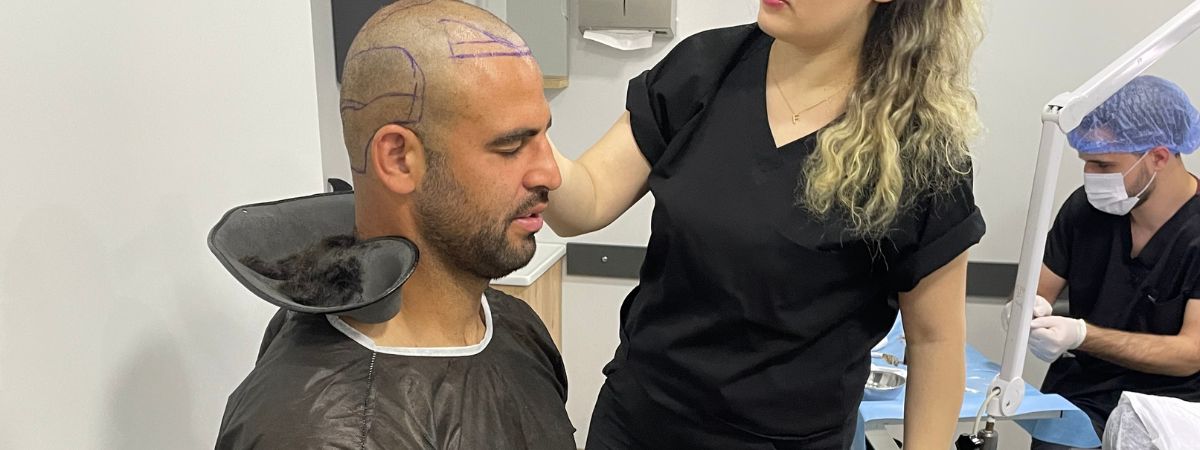
Get Ready For Your Hair Transplant Surgery
After a thorough consultation, you’ll be headed to surgery where your scalp will be prepped and local anaesthesia will be administered to reduce any pain during surgery.
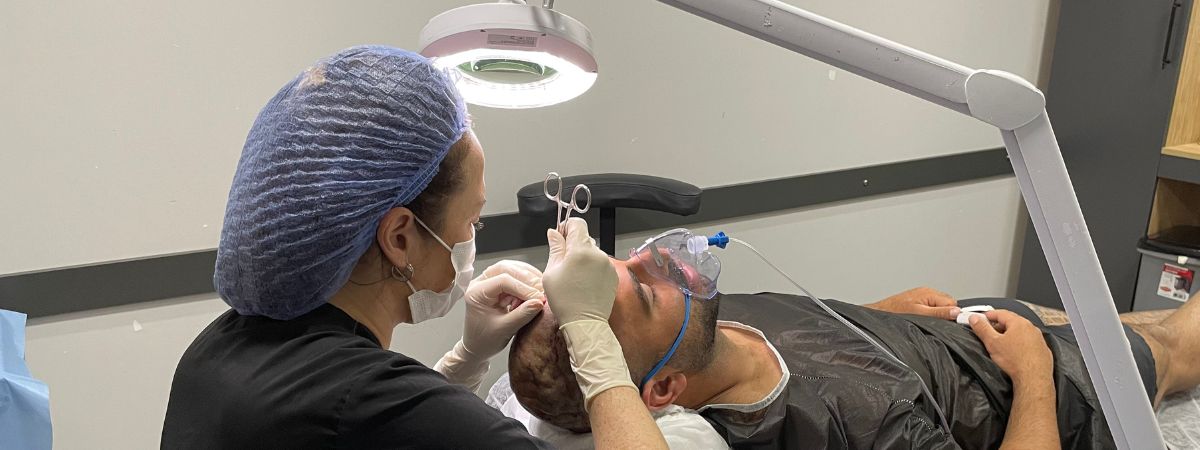
Graft Extraction During Hair Transplant
Under local anaesthesia, a motorised punch tool is used to score skin around individual hair grafts, which are then extracted using tweezers. Graft extraction can take 2 hours or so, depending on the number of grafts required. Afterwards, the donor area is bandaged.
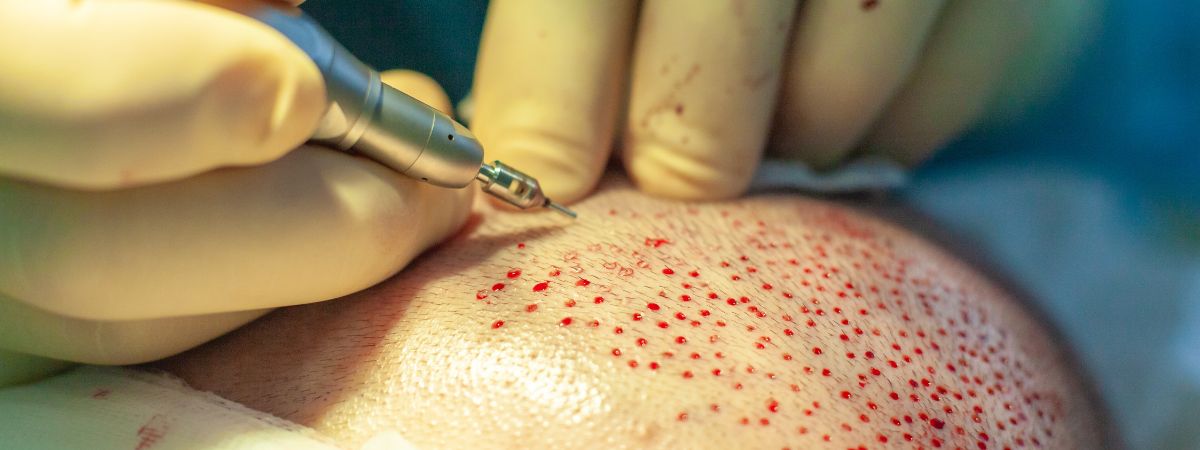
Site Creation During Hair Transplant
Typically, metal or sapphire blades are used to create small incisions in the recipient area. Their sizes can vary from 0.6 to 1.2mm, depending on the size of the graft itself. Instead of pre-made incisions, Choi implanter pens can also be used for simultaneous site creation and graft implantation.
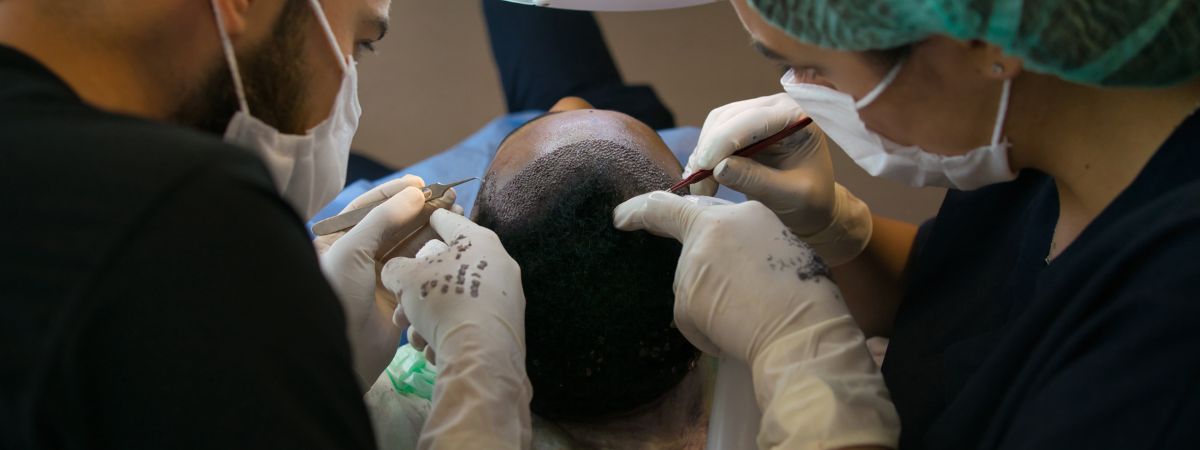
Graft Implantation During Hair Transplant
After site creation, harvested grafts are carefully handled with forceps and inserted back into the scalp to allow them to take root.
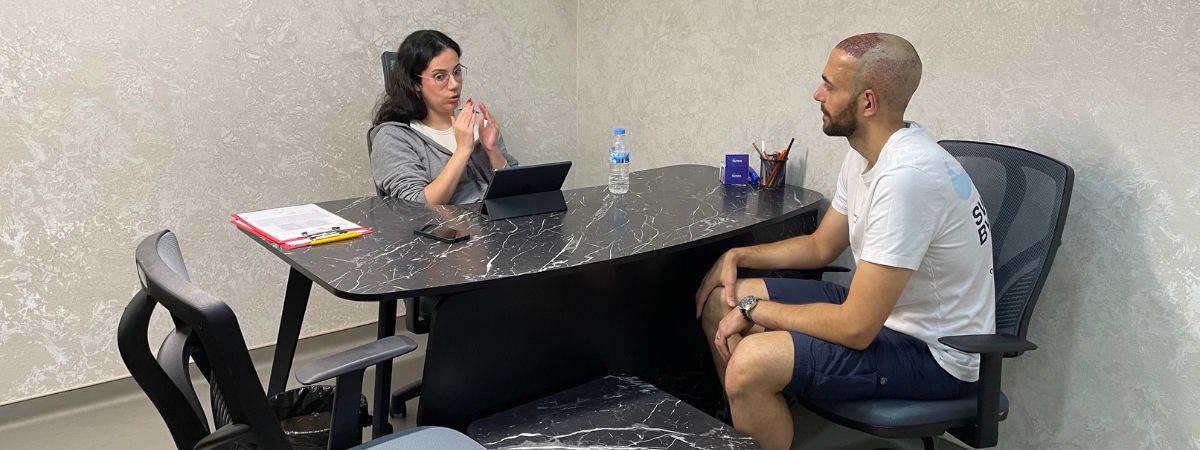
Have Your Postoperative Check-Up And Wash
One day after the hair transplant surgery, you will have post-op checks at the independent clinic to make sure your scalp is healing well. During this, your scalp will also be washed for the first time.

Get Remote Follow-Ups For Smooth Recovery
You can get in touch with us remotely at any time after your treatment. Our team will liaise with the independent clinician who performed your procedure to arrange photo evaluations of your scalp at 1 week, then at 1, 3, 6, 9, and 12 months, to monitor that your recovery is progressing well.
Successful Celebrity Hair Transplant Surgeries in Turkey
The support we provide has made us a popular choice for many celebrities seeking natural-looking hair restoration.
Hair Transplant Turkey Reviews and Testimonials
Real feedback from real clients. Check out why Longevita is the trusted choice by thousands of people to facilitate their hair transplant in Turkey.
Ready to start your Hair Transplant Journey in Turkey?
Fill out the form to receive a callback and book a consultation to receive your Free, no-obligation hair transplant treatment plan tailored specifically for your hair loss requirements.
Turkey Hair Transplant FAQs
How much does a hair transplant cost in Turkey?
Hair transplants in Turkey average between £1,900 and £4,400 depending on the clinic, technique and number of grafts required – compared to a worldwide average of £2,200 to £11,000 for FUE.
Longevita’s prices start from £1,650, inclusive of surgery at an independent clinic, medication and recovery support.
Is it safe to get a hair transplant in Turkey?
Yes, when you choose a reputable, accredited provider.
Turkey performs more hair transplants than any other country and Istanbul’s leading clinics operate to internationally recognised standards.
Longevita arranges hair transplants exclusively in accredited independent clinics in Istanbul. Longevita is UK-registered and has served over 40,000 clients from 100+ countries since 2012, with over 3,500 5-star reviews.
Why is Turkey so popular for hair transplants?
Turkey – and Istanbul in particular – became the global hub for hair transplants due to the high volume of procedures performed, the resulting concentration of specialist clinicians, and prices that are a fraction of those in Western countries.
Istanbul clinics perform tens of thousands of transplants per year, giving surgeons a depth of experience that is difficult to match elsewhere.
Combined with inclusive treatment plans, Turkey offers exceptional value without compromising on clinical quality.
What is included when you arrange a Hair Transplant through Longevita?
Treatments arranged through Longevita typically include: the surgical procedure (FUE, DHI or Sapphire FUE) at an independent clinic, and post-operative medication. The dedicated Longevita team support your journey from initial enquiry through to your return home, helping you stay in contact with your independent clinical team during recovery.
What is the difference between FUE, DHI and Sapphire FUE hair transplants?
FUE (Follicular Unit Extraction) extracts individual grafts and implants them into recipient sites made with a steel blade.
Sapphire FUE uses a sapphire-tipped blade to create finer, more precise incisions, reducing trauma and enabling higher density results.
DHI (Direct Hair Implantation) uses a Choi implanter pen to place grafts directly without pre-made incisions, giving the treating clinician greater control over angle, depth and direction for a natural hairline.
All three techniques can be arranged by Longevita in independent, accredited clinics.
How many grafts do I need for a hair transplant?
The number of grafts depends on your degree of hair loss (assessed using the Norwood Scale), your donor area density, hair characteristics and desired coverage.
Most hair transplants arranged by Longevita in Istanbul require between 2,500 and 4,000 grafts. Your exact graft count is confirmed during a free consultation with a specialist, based on photographs or a video assessment.
The independent clinician arranged through Longevita will offer the maximum number of grafts in a single session at no additional cost.
How long is recovery after a hair transplant in Turkey?
Many people find they can return to desk-based work within 3–5 days of surgery. Redness and scabbing in the recipient area typically resolves within 10–14 days. Transplanted hairs shed at 2–4 weeks — this is a normal part of the process. New growth typically begins around months 3–4, with the majority of results visible by month 9 and full results at 12–18 months.